






From 1 to 7 days
The Main Cultural and Religious Festivals of Bolivia
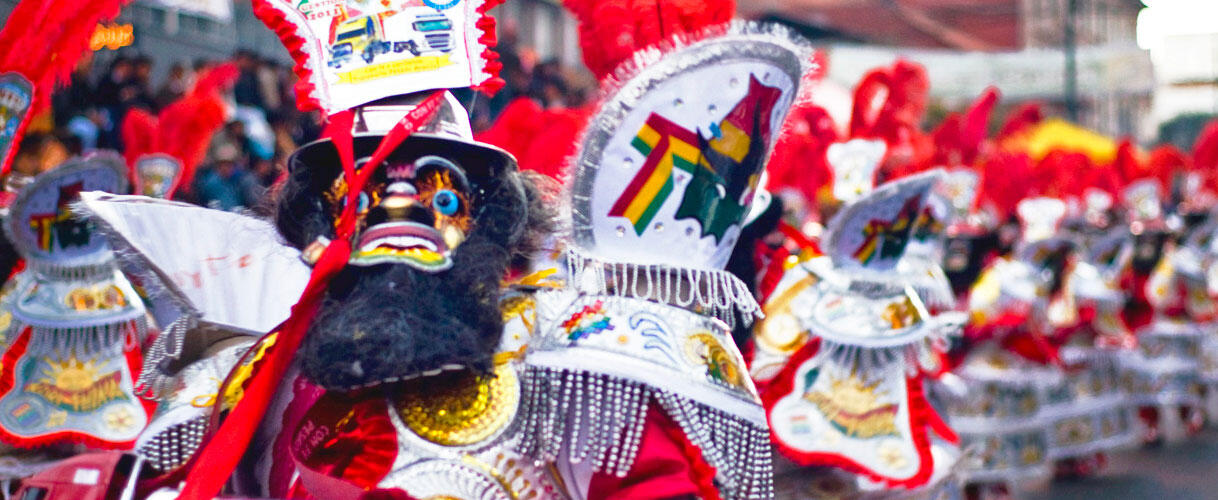
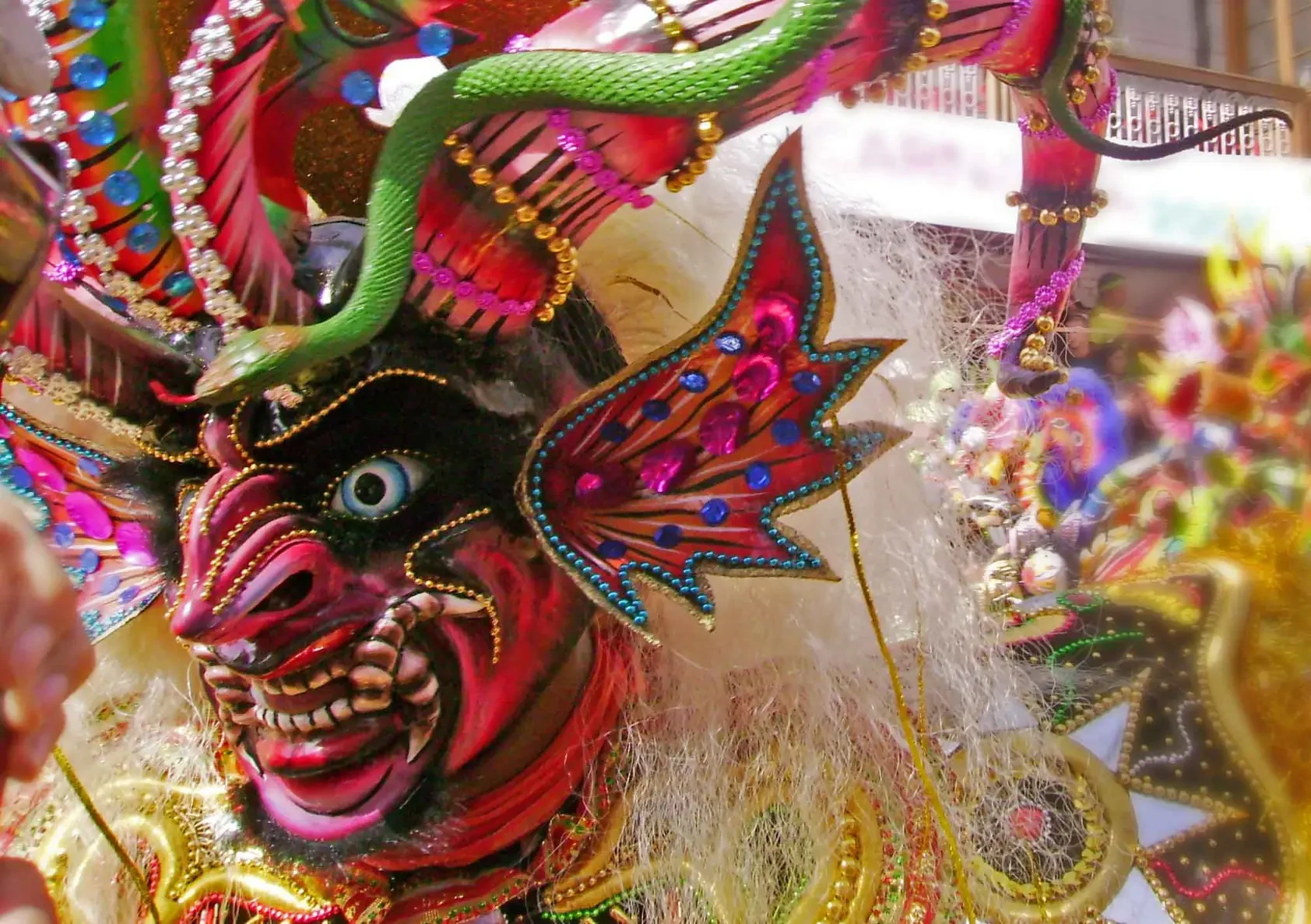
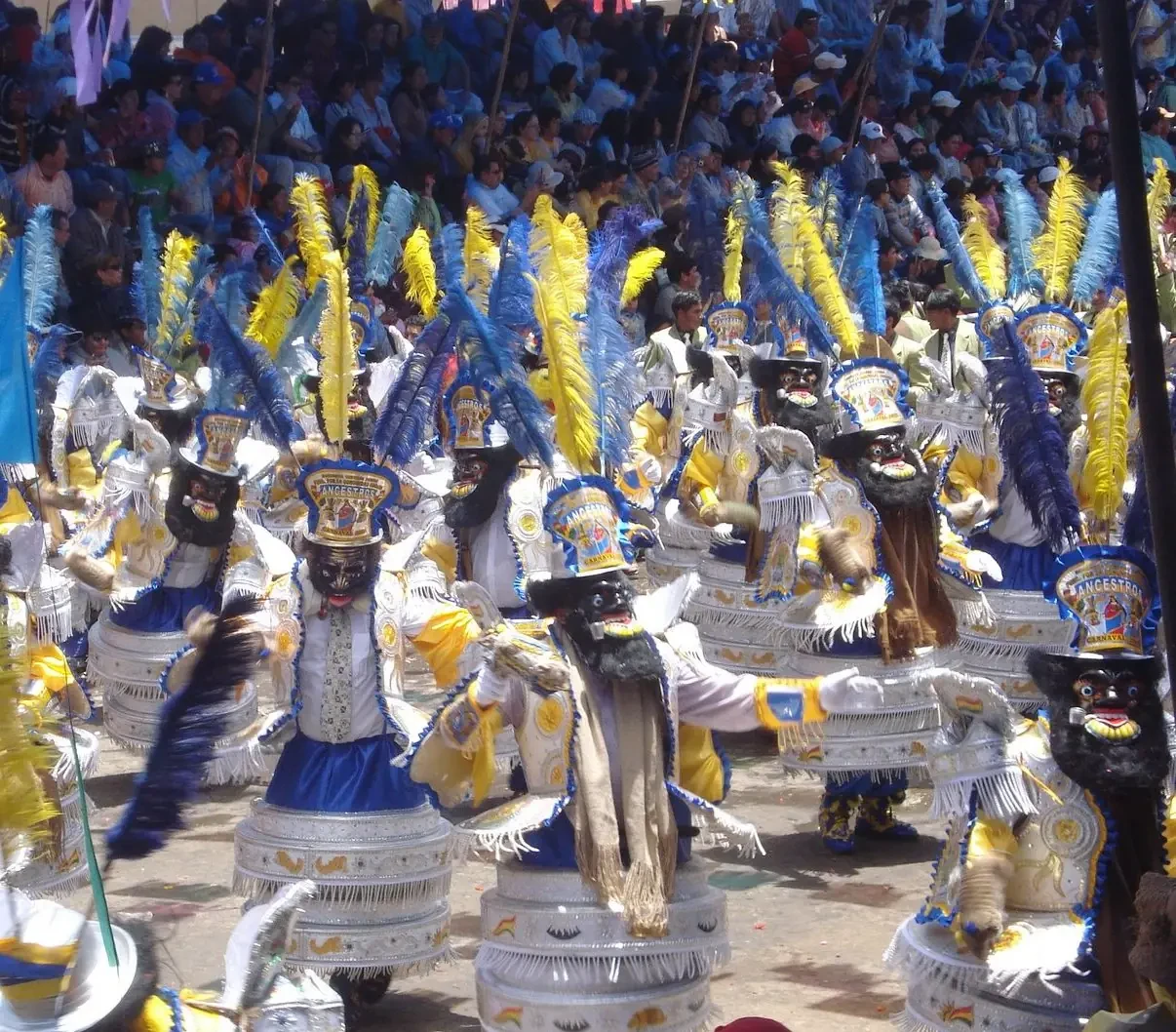
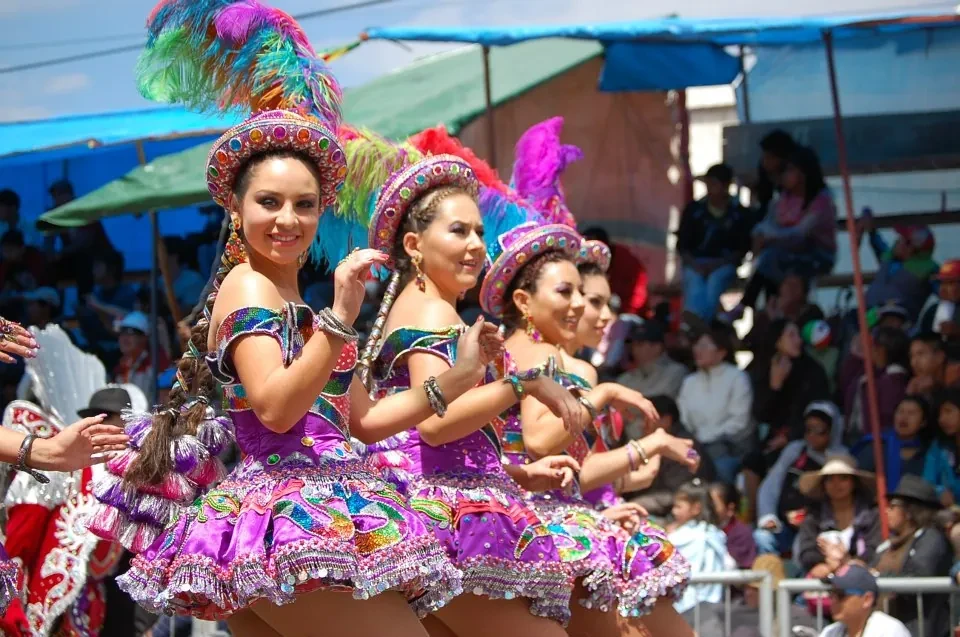
The cultural richness of Bolivia is expressed strongly in its festivities and celebrations, many of which are internationally recognized for their heritage value. Among the most emblematic stands the Oruro Carnival, declared a Masterpiece of the Oral and Intangible Heritage of Humanity by UNESCO. This celebration combines religious devotion and Andean cosmology in honor of the Virgin of the Socavón, through dances such as the Diablada, Morenada, and Caporales. More than 50 brotherhoods participate in a multitudinous folk parade where music, embroidered costumes, and ritual symbolism turn the city into a vibrant stage of cultural identity.
In La Paz, the Feast of the Lord Jesus of Gran Poder is one of the most imposing urban manifestations in the Andes, with thousands of dancers and musicians traveling through the city in a demonstration of faith, identity, and social prestige. In the same La Paz cultural context, the Alasitas Fair also stands out, a traditional celebration where miniatures symbolizing desires for prosperity are purchased, blessed in honor of Ekeko, blending Andean beliefs and contemporary urban practices.
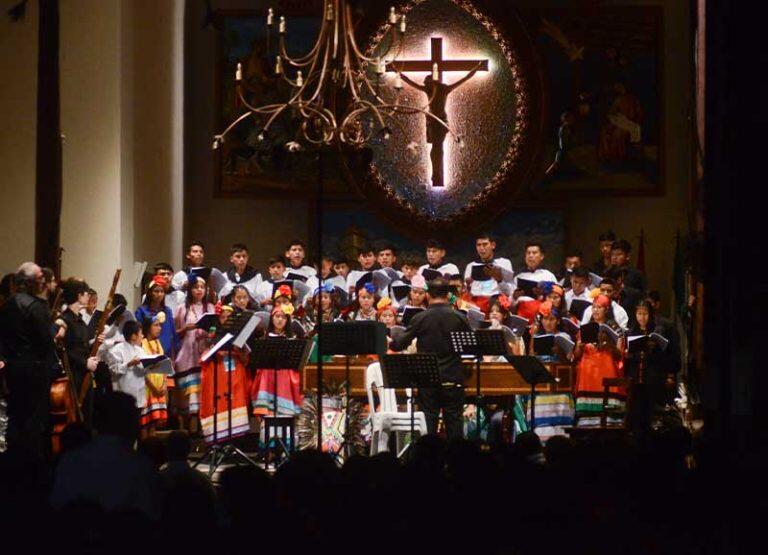
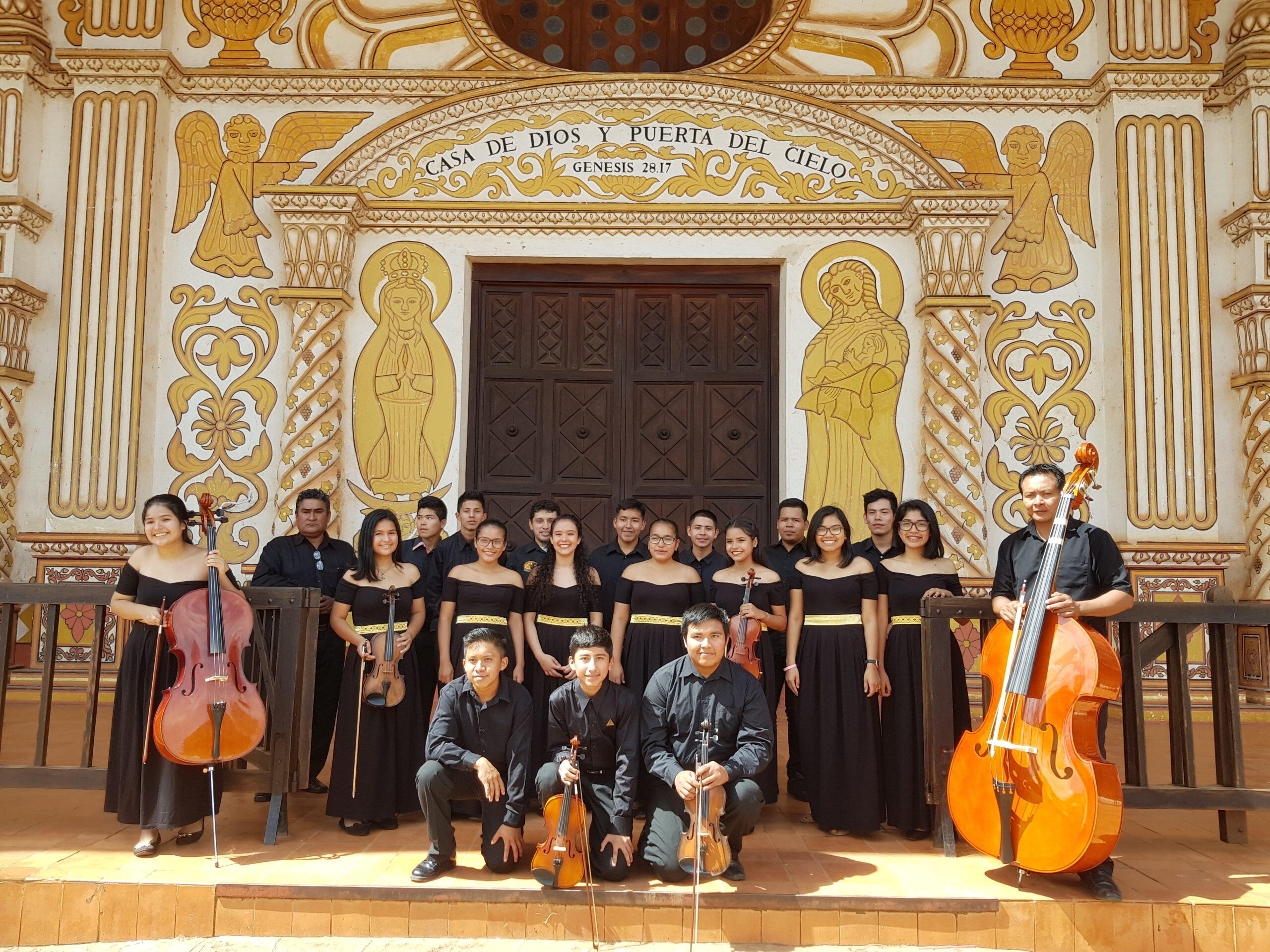
For its part, in Santa Cruz the International Festival of Renaissance and Baroque American Music "Missions of Chiquitos" is celebrated, which highlights the musical legacy of the ancient Jesuit missions and positions Bolivia as a reference for American Baroque.
Discover the festivities and dances
Oruro Carnival
Location: City of La Paz
Date: Variable, February or March
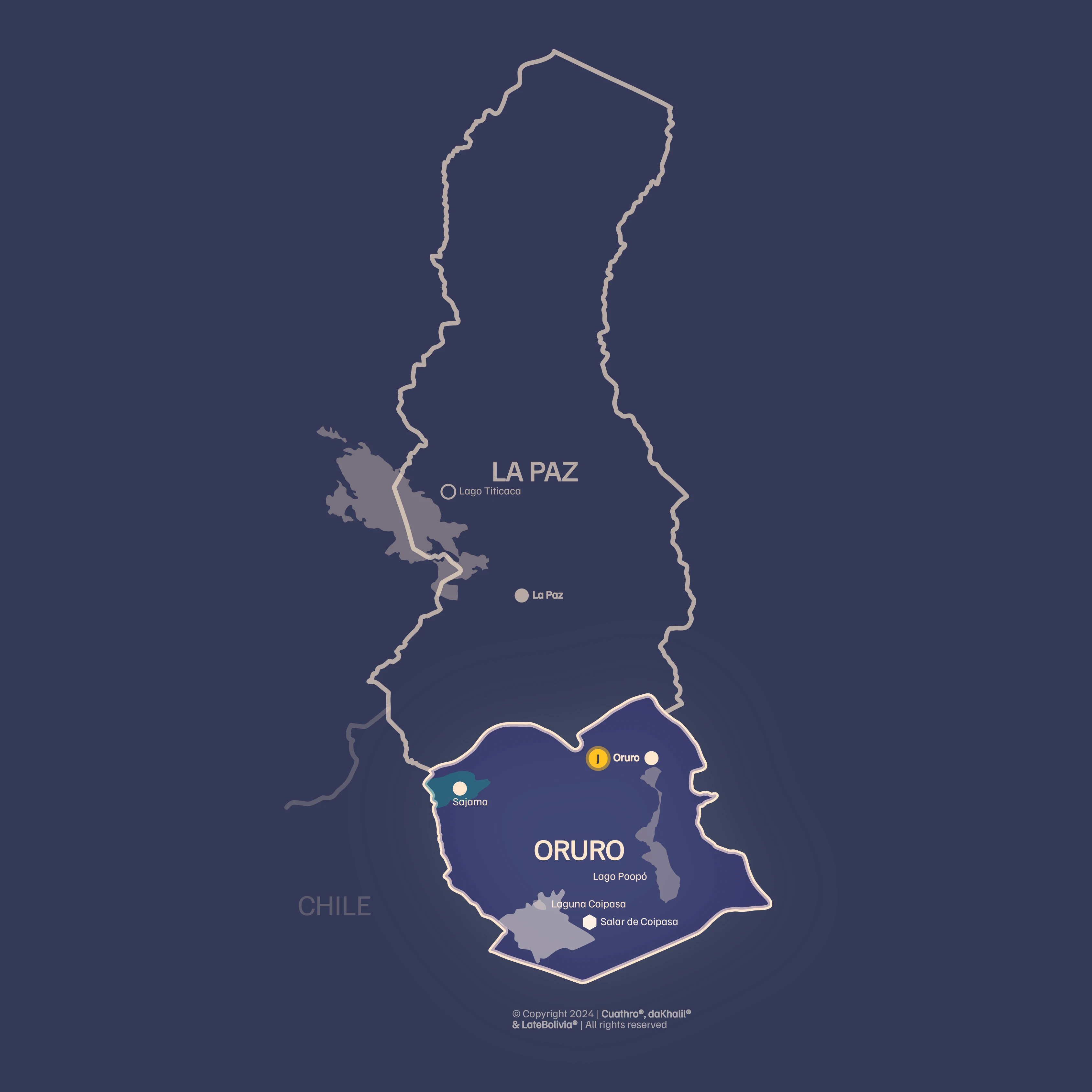
The city of Oruro was founded during the colonial period as a silver mining center in the region of the Urus; today it is one of the smallest cities in the country. However, it retains its attractive European-style design from that era. The most important tourist activity is the "Oruro Carnival," declared in 2001 as a "Masterpiece of the Oral and Intangible Heritage of Humanity" by UNESCO due to the great religious and cultural value displayed during 2 days of parade.
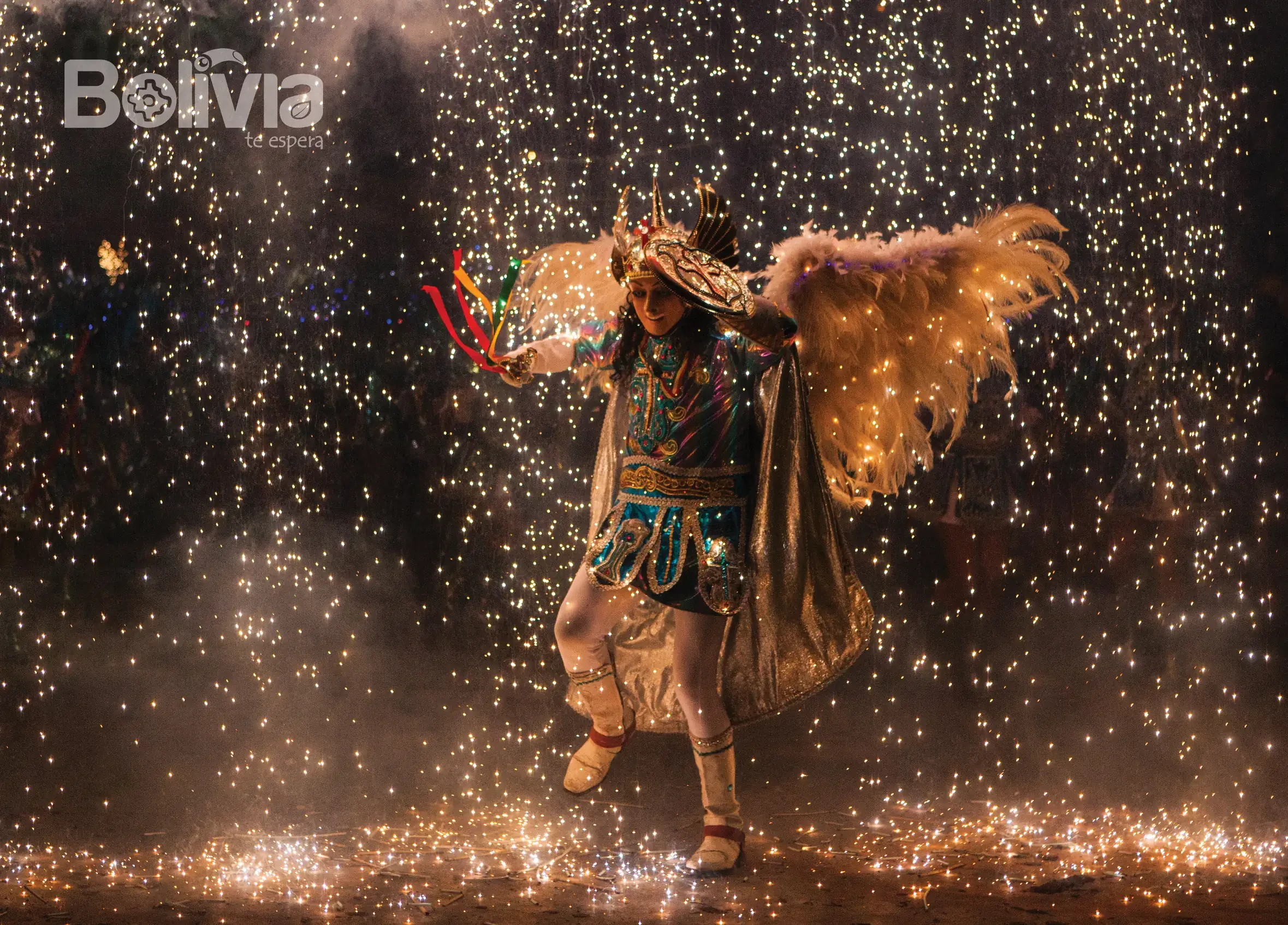
Among the most important dances presented at the Oruro Carnival, "La Diablada" must be mentioned, originating from the ancient Andean cult to the being that lived in the depths of the mines, which was later adapted to the devil from the colonial period onward.
International Festival of Baroque and Renaissance American Music "Missions of Chiquitos"
Location: Santa Cruz Department - Chiquitania Region
Date: Variable, March or April
Recognized as the largest early music event in the world and one of the most influential. This gathering has been held biennially since 1996; more than 370,000 people have attended 804 masterful concerts, led by the talent of 285 groups and 4,687 musicians from several countries around the world.
The Great Chiquitania is located in the eastern middle portion of the Santa Cruz Department (Bolivia), with approximately 220,000 km² it constitutes 56% of the territory.
In Chiquitania, six Bolivian Jesuit missions are preserved, declared Cultural Heritage of Humanity by UNESCO in 1990. The only missions that since their foundation have kept the mission culture alive in South America.
In the second half of the 17th century, religious members of the Society of Jesus established in the plains of what is currently Bolivia the missions of Moxos (1682-1767) and Chiquitos (1691-1767), where one of the most relevant cultural encounters of Spanish America took place.
One of the most important results in this process of syncretism, product of missionary or reduction practice, is music. The Loyola missionaries used it as an instrument of evangelization (taking advantage, moreover, of the special skill and taste of the native peoples), producing an enormous wealth, in quality and quantity, without which the history of music in the Western world today cannot be understood.
The restoration of the missions that began in the 1970s under the supervision of Swiss architect Hans Roth, allowed the recovery of more than 5,000 pieces from the Chiquitos musical archive, the most important collection of indigenous Baroque music in South America.
Today the mission temples are, in addition, stages for Renaissance Baroque music festivals, with the International Festival of Baroque Music Missions of Chiquitos being the most important on the continent.
Feast of the Lord Jesus of Gran Poder (Folkloric Parade of Gran Poder)
Location: City of La Paz
Date: Variable, May or June
The Feast of the Lord Jesus of Gran Poder or "Gran Poder Festival" is one of the most important cultural manifestations in the city of La Paz.
Popular tradition indicates that it originated in the Ch'ijini area of La Paz, where a canvas arrived with the image of a "Jesus with three faces" (which was actually an image of the Holy Trinity); popular tradition reinterpreted the work from Aymara superstition, claiming that on the right face one asked for good wishes, on the left face bad wishes, and on the center face some wish for oneself.
Around 1930 this canvas was repainted, revealing the face that was in the center, and the denomination of the image as that of the Lord Jesus of Gran Poder began, in whose honor a folk parade bearing the same name was started.
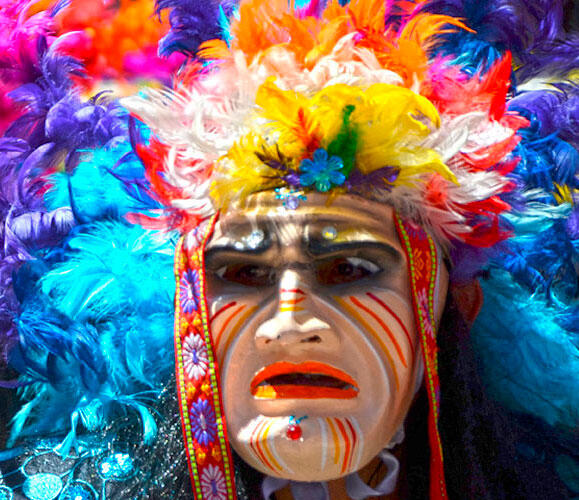
At first the festival only developed in Ch'ijini, but it has spread to the center of the city where thousands of dancers and spectators take to the streets of the city and celebrate the festival filled with music, color, joy, and religious devotion.
Dance: La Morenada
Catalogued as one of the heavy dances of greatest tradition, the Morenada has Aymara origins and represents the suffering of Black slaves brought for the Mita in Potosí.
They are characterized by the costumes and the slow rhythm of the choreography. In the attire, the ostentatious design stands out, the making of the cape and the mask in men, the shawls and the skirts in women. The presence of the cholas is an important component, as they parade with pride and gallantry alongside the troop of morenos who advance to the rhythm of the matraca (a handheld idiophone musical instrument), guided by the achachi galán.
Dance: Caporales
The dance is inspired by the black foremen—called "caporales"—who controlled slaves of their own race on colonial coca-producing estates.
The dancers wear colorful and shiny costumes, multi-colored embroidered pants, and boots with bells; they carry a whip and a whistle in their hand. To the sound of an agile rhythm based on the saya, they perform acrobatic, elegant, and flirtatious steps. The women wear short skirts and embroidered blouses in a display of sensuality.
Dance: Waca Tokhoris
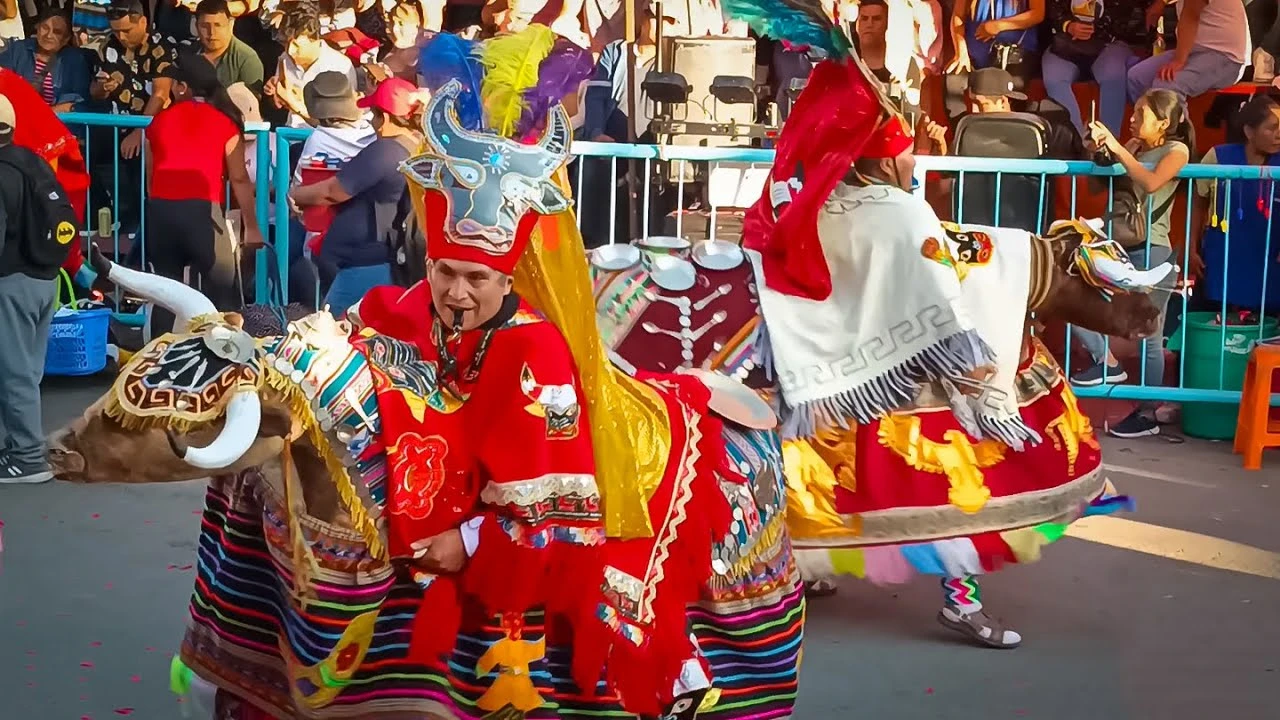
Waca Tokhoris is a dance that represents bulls that arrived in America after the Conquest. The dancers carry on their waist a reproduction of the animal made from dried leather. Women wear several overlapping skirts (in many cases up to 25) and a chuq´haña (a bayeta mantle of the land that covers the head).
The kuchillo is a boisterous and satirical character indispensable in the dance of the wacas, who, to the rhythm of the acrobatic jump, accompanies the members of this dance. He is characterized by his disguise with monkey or mico features made from bayeta, wears a leviton (long skirt) coordinating gray and white or black trousers, and carries a mask that covers the entire head, with flexible horns pointing upward. Other figures in this dance are the matador, who parodies Spanish bullfighters. On the other hand, there are the milkmaids and the Kaisillos (people who carry a multicolored feather standard).
Dance: Kullawada
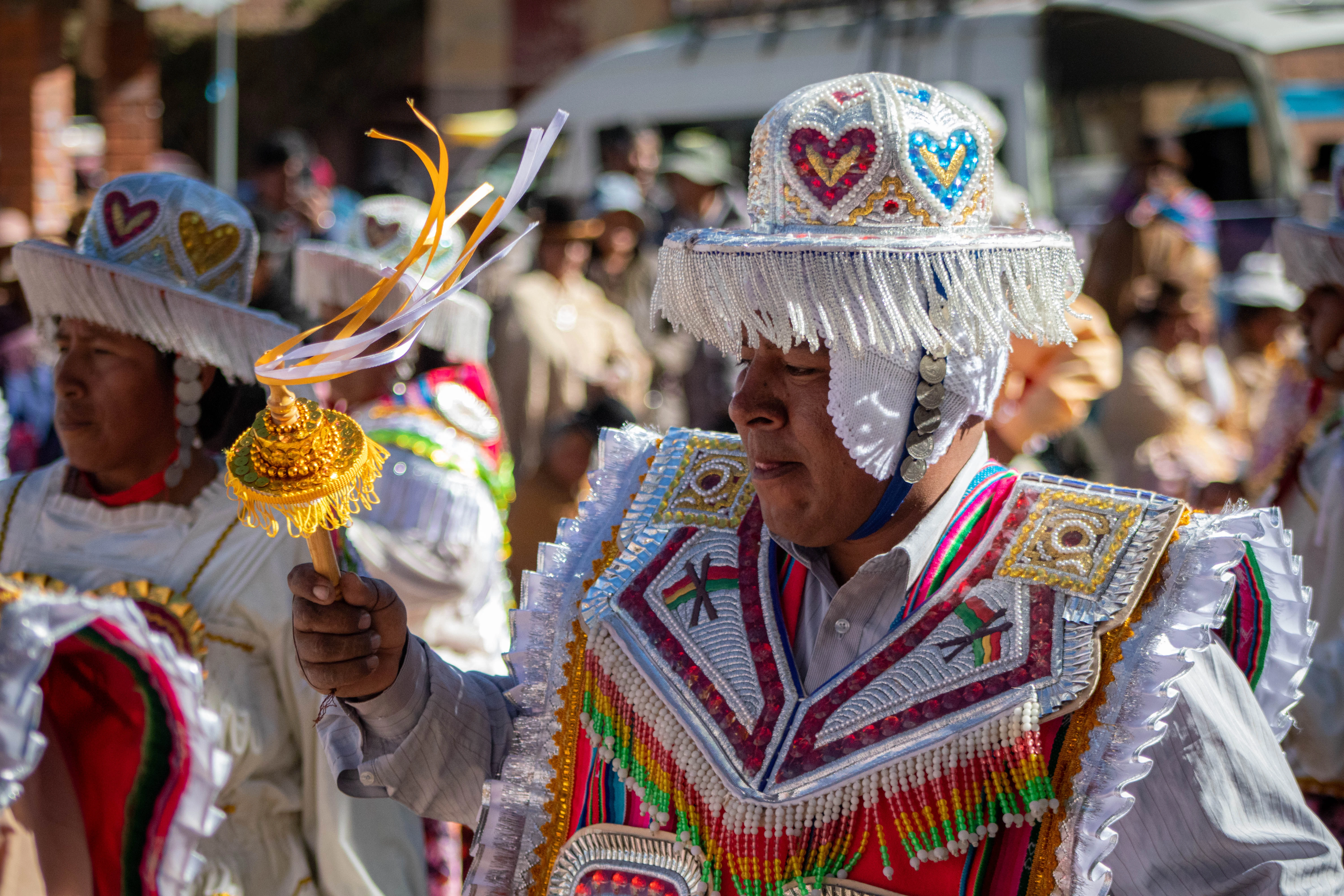
Kullawada is a dance related to textile activity, developed in all Aymara ethnic groups of the Bolivian Altiplano. The dancers, women and men, carry as a symbol a wooden spindle in their hands. The dance is directed by the waphuri or guide, who carries a giant spindle with which he directs the movements of the troop of dancers; he is the only character in the group who wears a mask with an enormous nose and two lateral faces. Particularly composed of unmarried young people preparing for marriage, the dance expresses in the performance the elegance and flirting of the couple.
Dance: Llamerada
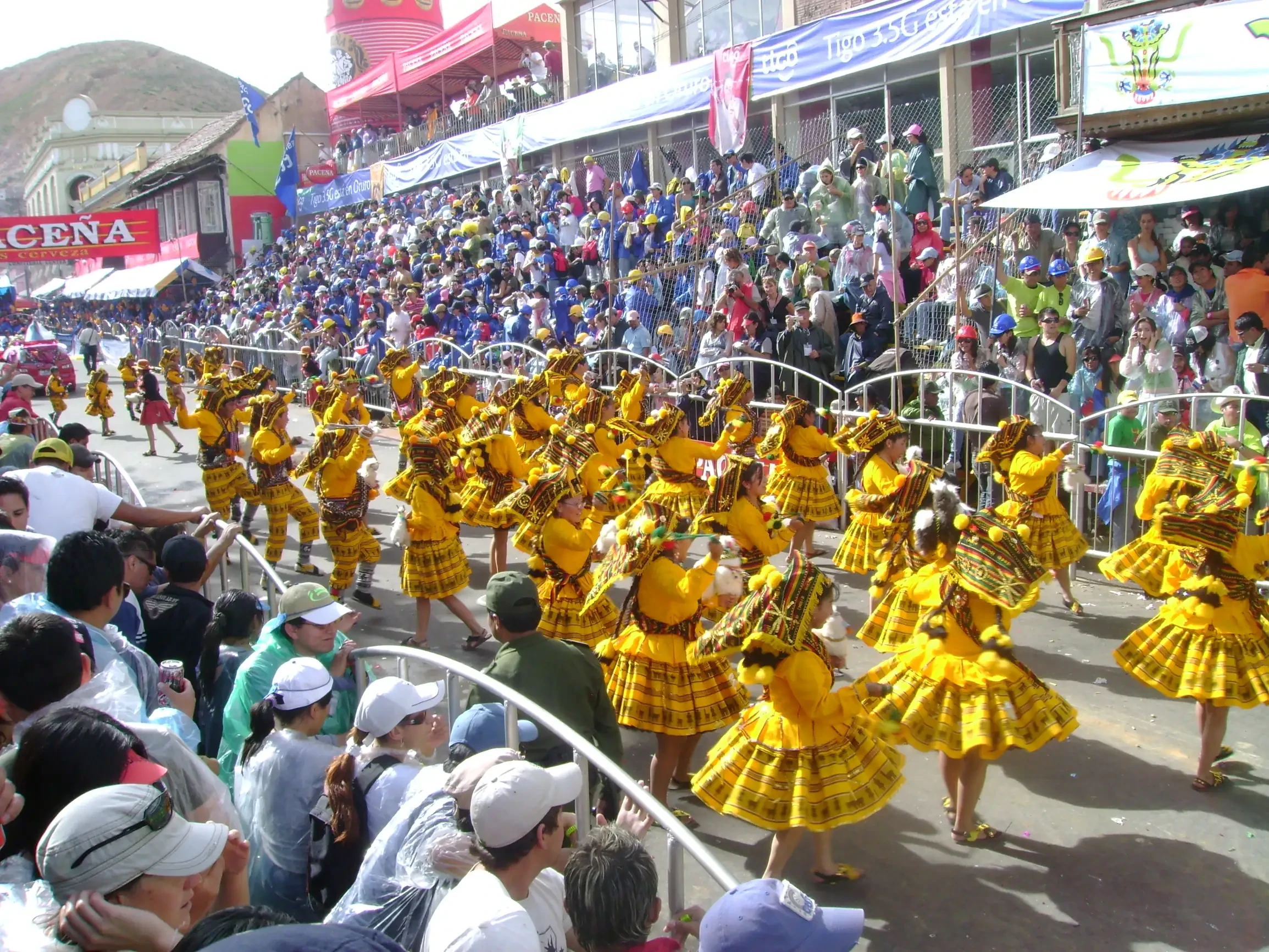
Llamerada is another manifestation of the folkloric richness of La Paz. Related to agricultural and livestock activity, especially the breeding of llamas. The dance also recalls the domestication of the first camelids of the Andean zone (guanaco, alpaca, and vicuña). The dancers wear on their heads a representation of the ancient four-pointed monteras used by different ethnic groups since pre-Hispanic times.
The dancers wear traditional monteras and ponchillos of llaneros, a stuccoed mask with pursed lips in a whistling attitude, in the hand they carry the q´urawa or sling, trousers and leggings with abarca (sandals). The women wear elegant embroidered blouses, carry an Aguayo and bags with silver coins; their outfit includes the skirt to the knee and Abarcas.
The list of dances from the folkloric parade of La Paz includes dances such as the Diablada (mythological dance of the supay devil), Incas, Kantús, Quena quenas, Suri Sicuris, Tobas, Tinkus, Doctorcitos, Auqui Auquis, and other expressions.
Tripadvisor


Request a quote
Festivities
From 1 to 7 days