

Wonderful biodiversity and ancestral cultures
About Bolivia
Bolivia has been internationally awarded several times as "Best Cultural Destination of South America", "Best Nature Destination", "Dream Destination of the Year" by various institutions, including World Travel Awards.
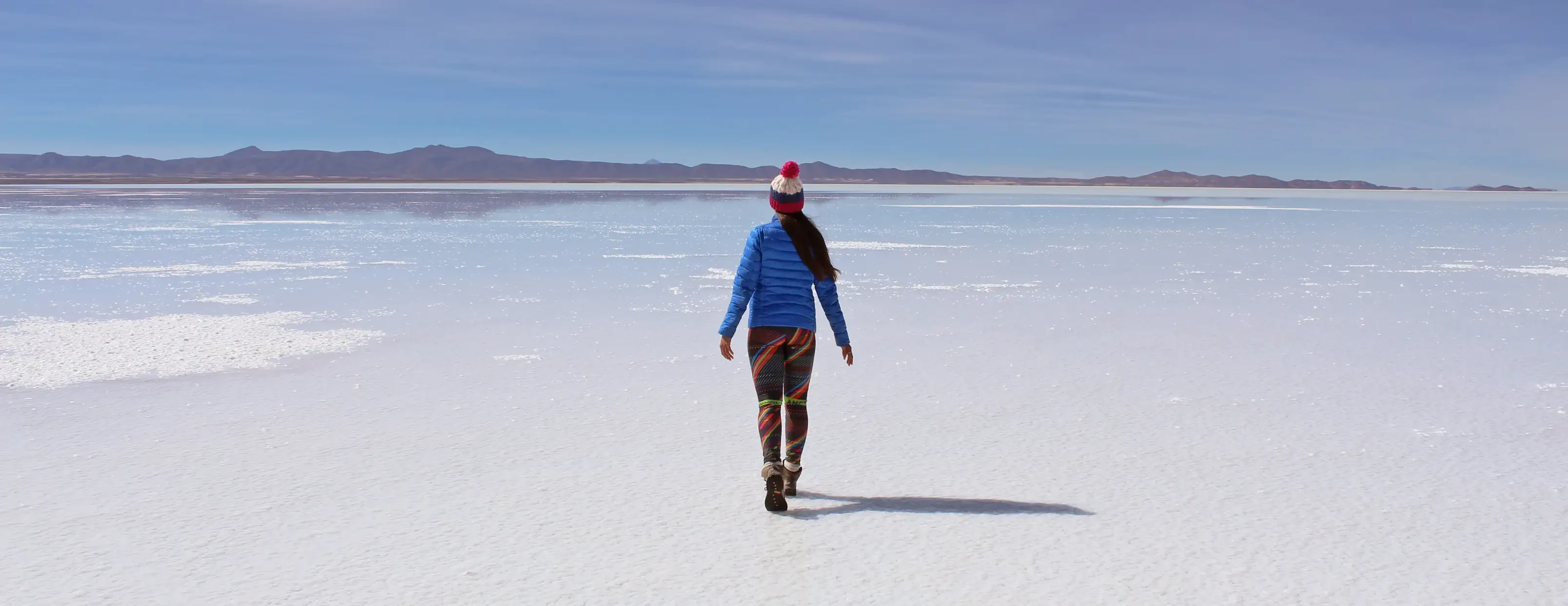
Also known as the "Tibet of the Andes" due to the altitude at which its populations are located at the foot of immense mountains that form part of the Andes Mountain Range. In the highlands are found most of the most recognized attractions in Bolivia, including: Salar de Uyuni and Lake Titicaca. However, in its valleys and lowlands there is also an invaluable cultural and natural wealth, such as: Bolivian Pantanal, Amboró Park and the great cultural wealth that houses the Jesuit Missions of Chiquitania and Samaipata.
Bolivia has developed local development projects promoting the participation of indigenous communities in the development of tourism services, as occurs with Quechua and Tacana communities that have lodges that provide comfort and great service within recognized national parks.
We invite you to get to know our country, of whose natural wealth we are proud, but we assure you that where you will find the greatest wealth will be in its people.
#FeelTheHeartbeats
Discover Bolivia
Departments and destinations
The tourist departments par excellence of Bolivia are La Paz, Potosí, Sucre and Santa Cruz. However, there are increasingly more circuits and services in the departments of Cochabamba, Oruro, Tarija, Beni and Pando. The most visited tourist destinations are the Salar de Uyuni, the Eduardo Avaroa National Reserve, the Madidi National Park, Lake Titicaca, the Jesuit Missions and the cities of La Paz, Sucre, Potosí and Santa Cruz.
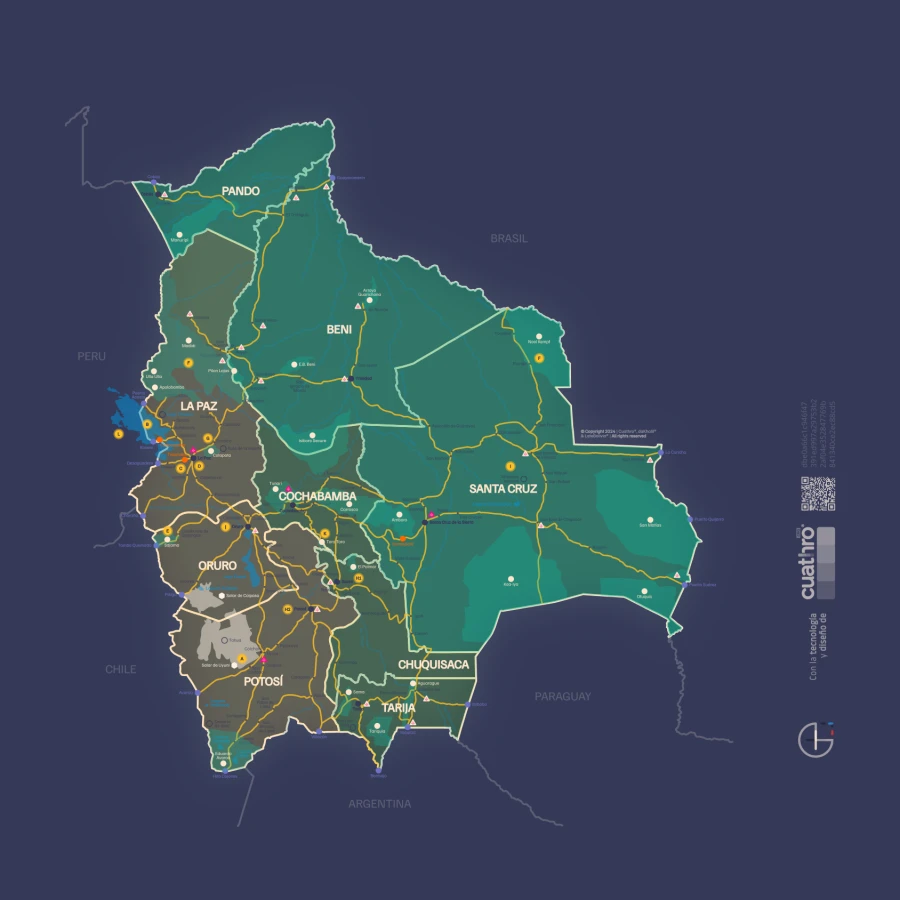
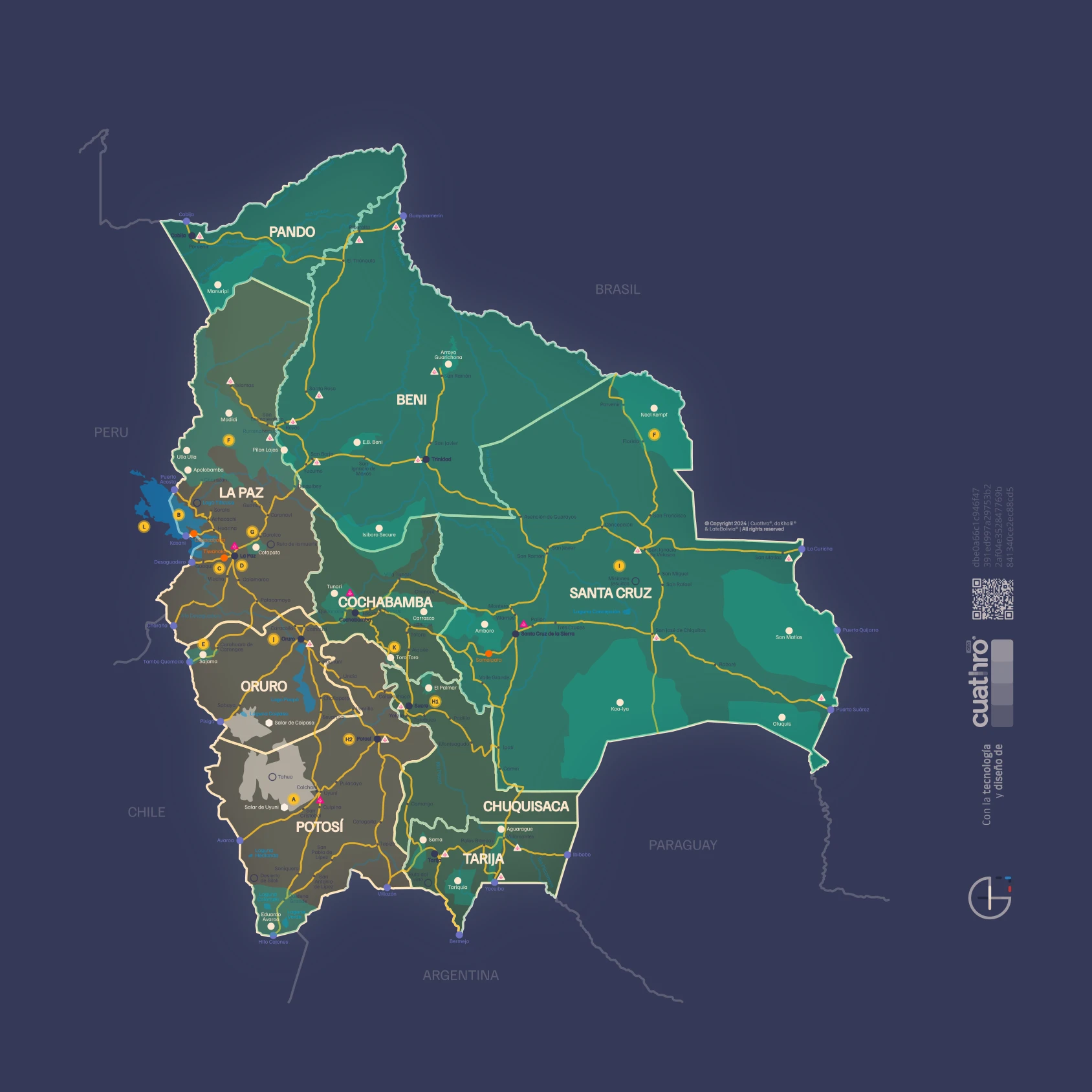
Located in the heart of South America, Bolivia borders the Federative Republic of Brazil, the Republic of Paraguay, the Republic of Argentina, the Republic of Chile and the Republic of Peru.
Nothing better identifies our country than its diversity, its culture surrounded by living traditions that have endured over time, and places where nature offers magnificent settings and contrasts of incomparable beauty.
Live the unique experiences of incomparable natural wealth and ancestral cultures that still persist in our country. We invite you to feel the heartbeats of Bolivia, the heart of South America!
Geography and Biodiversity
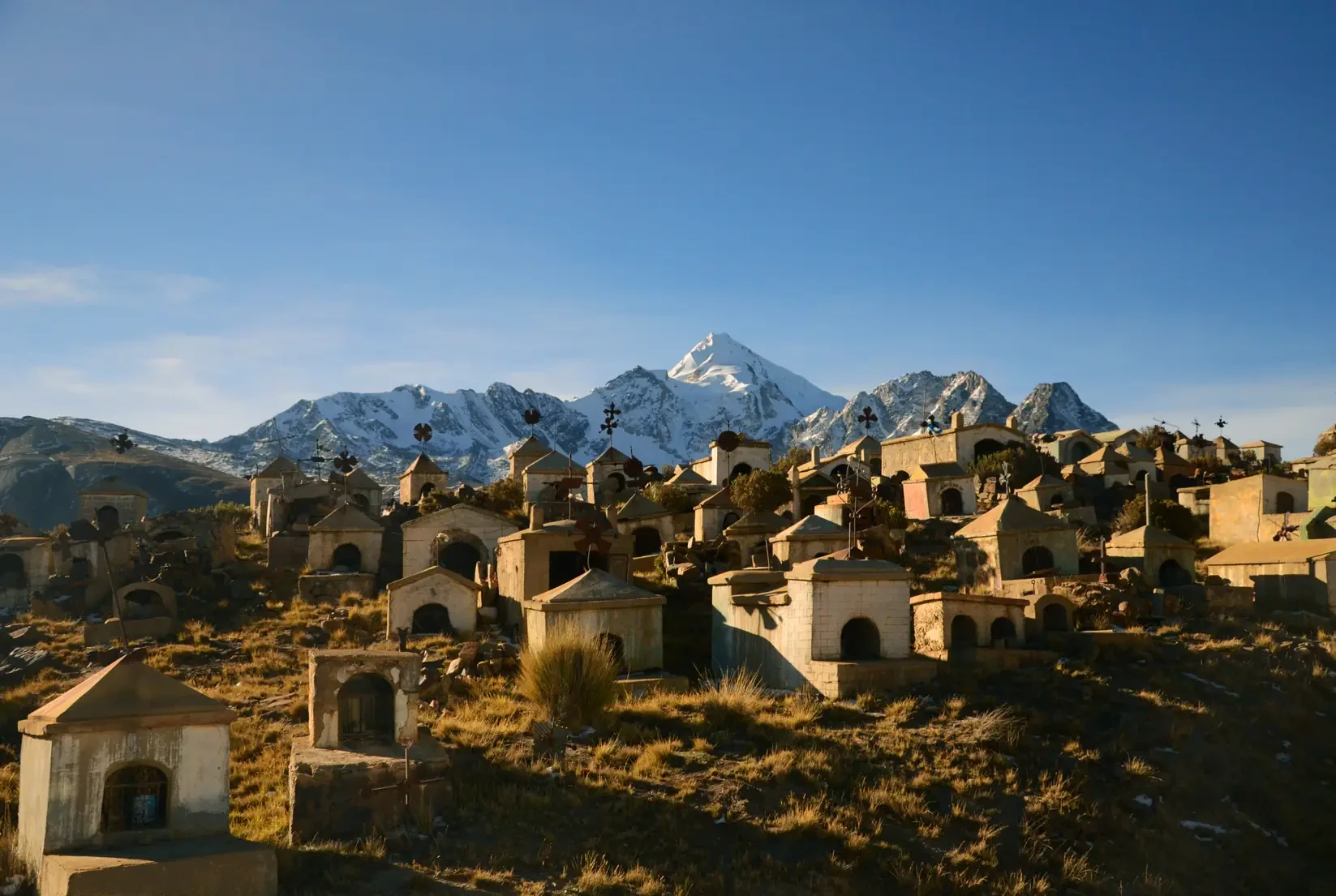
Bolivia is a landlocked country that borders Brazil to the north and east, Argentina to the south, Peru to the west, Paraguay to the southeast and Chile to the southwest. With an area of 1,098,581 km², Bolivia is the fifth largest country in South America. The feature that makes Bolivia unique is its topography, formed by the contrast between the Altiplano (at 4,000 meters above sea level) and the warm lowlands of the east (at 200 meters above sea level). This is due to the Andes Mountain Range, which in Bolivian territory divides into two chains: the Western (occidental) and the Eastern (oriental) or Royal. The Yungas —the transition zone between the dry highlands and the humid lowlands— is where the Andes descend towards the Amazon rainforest, the Brazilian Pantanal and the Chaco region.
Bolivia is divided into 9 departments: La Paz, Santa Cruz, Cochabamba, Chuquisaca, Potosí, Oruro, Beni, Pando and Tarija; which, in turn, are subdivided into provinces.
Megabiodiversity of Bolivia
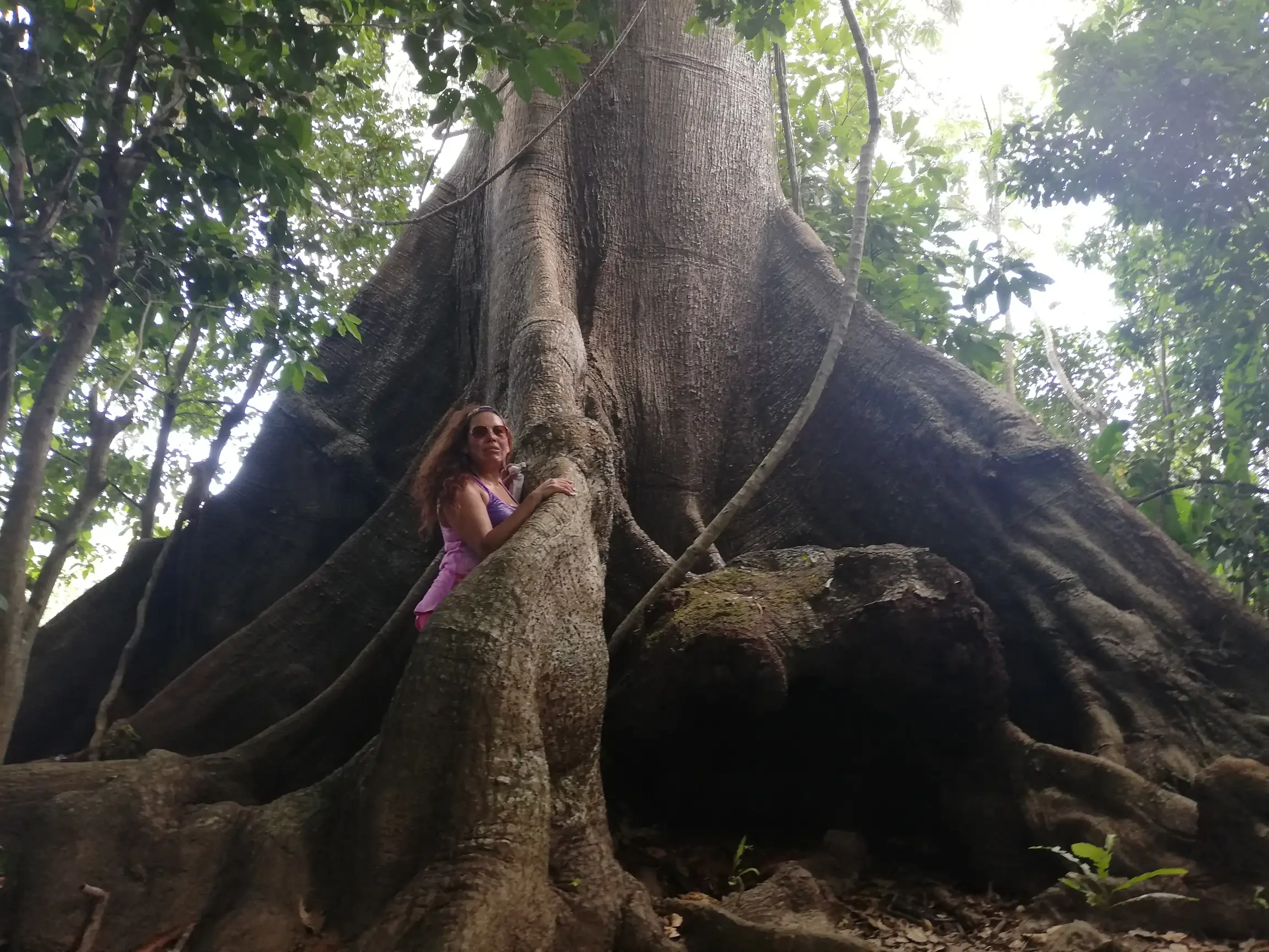
Bolivia is among the 8 megadiverse countries of the world, which shelter more than 70% of the known species on the planet. Its altitudinal gradient, which varies from 90 to 6,500 meters above sea level, forms 4 types of biomes, 32 ecological regions and 199 ecosystems.
The most outstanding ecosystems that Bolivia possesses are the Yungas region, the Amazon, the Chiquitano forest, the Gran Chaco and the inter-Andean forests. Bolivian territory represents 0.2% of the world surface and its forests cover around 3.5% of the planet's forests. However, Bolivia shelters between 30 and 40% of all biodiversity on the planet.
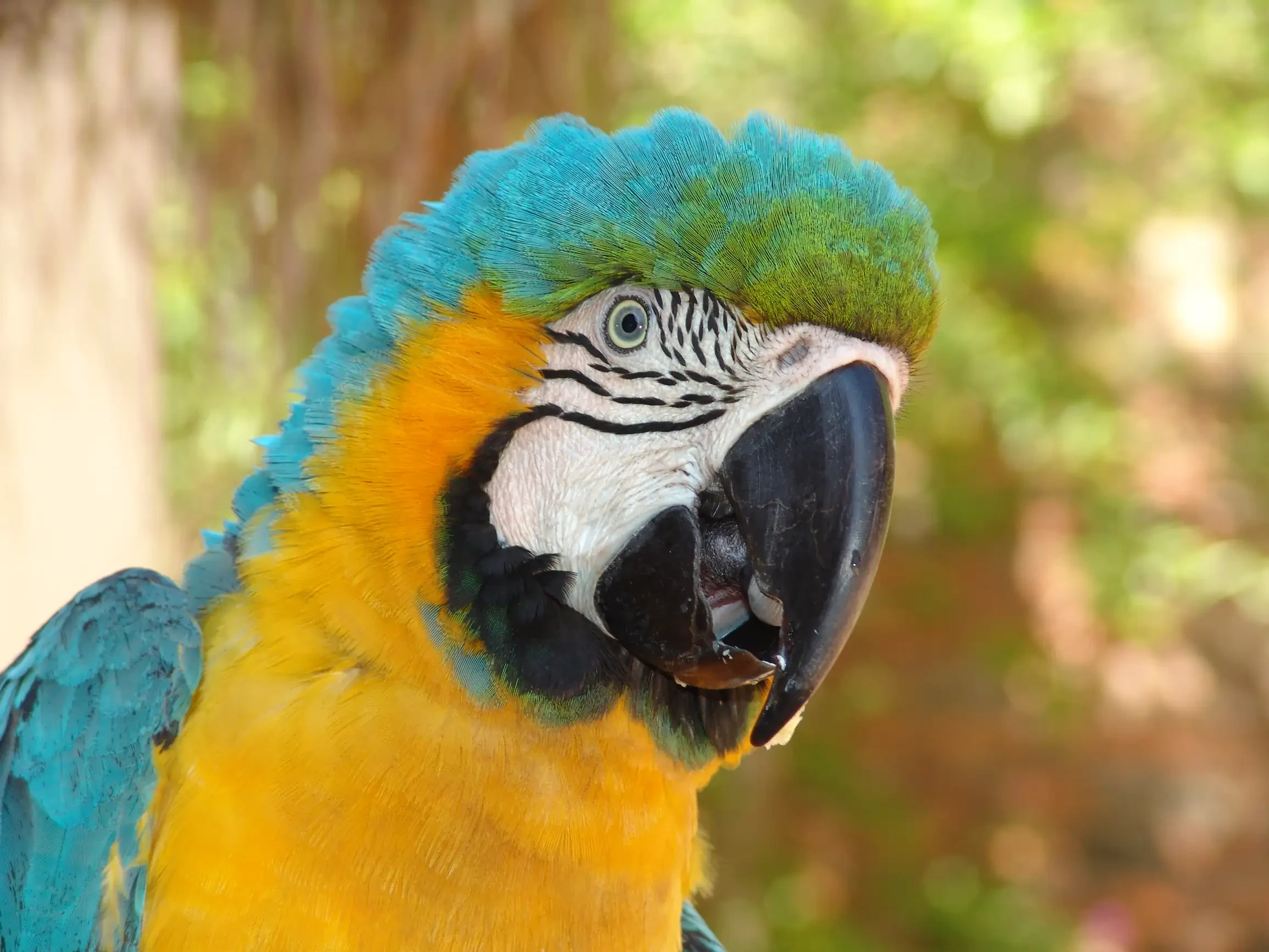
Bolivia has more than 2,900 species of vertebrates, distributed in 398 species of mammals, more than 1,400 species of birds (seventh place worldwide), 204 species of amphibians, 277 species of reptiles and 635 species of freshwater fish. In addition, more than 3,000 species of butterflies have been identified (occupying fourth place worldwide).
Festivities and gastronomy
Bolivia Festivities Calendar
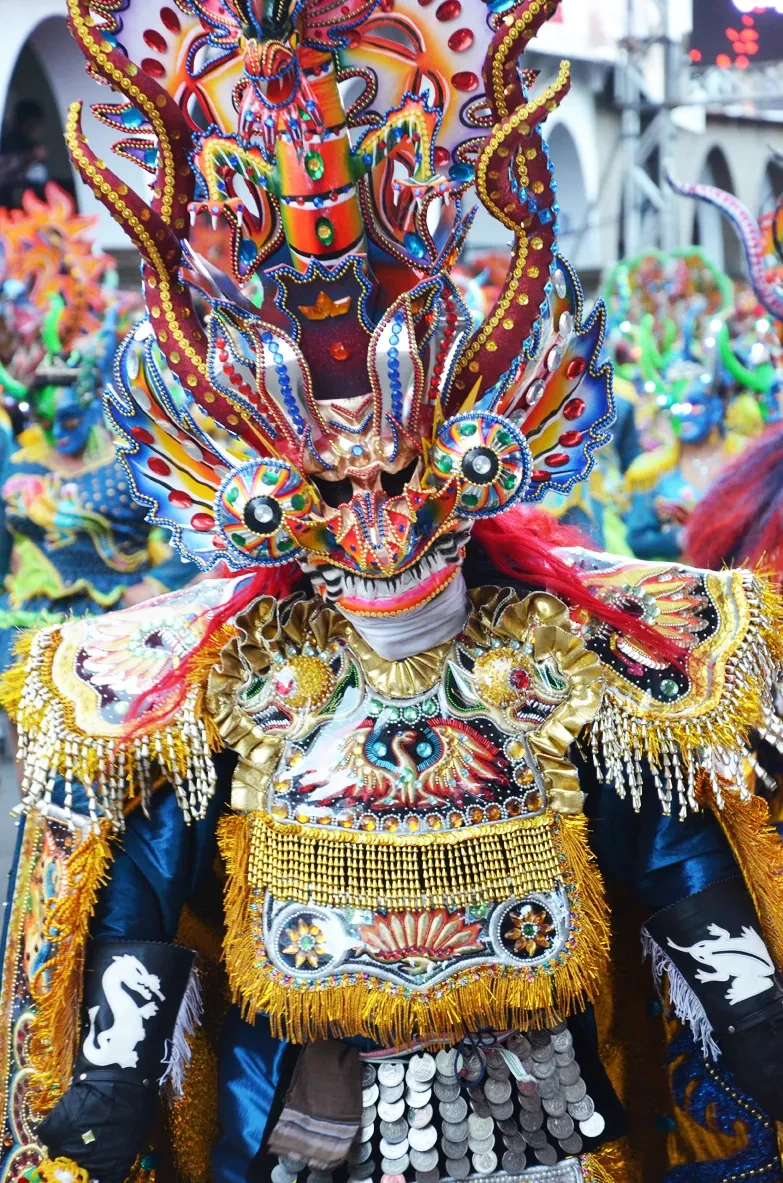
Bolivia has a wide festivities calendar in which local religious and popular celebrations are the most representative, such as the Carnival of Oruro, declared Intangible Cultural Heritage of Humanity by UNESCO. Each celebration is a whole event. We begin on January 1 with New Year's Day and then celebrate Carnival, which takes place in February or March.
JANUARY
1 – New Year's Day
6 – Epiphany
24 – Alasita Fair
FEBRUARY
2 – Candelaria Festivity
10 – Oruro Anniversary
CARNIVAL (variable date)
Art and Wine Festival in Tarija
MARCH
10 – El Alto Anniversary
17 – International Drama Festival (FITAZ)
23 – Day of the Sea
APRIL
Holy Week (variable date)
15 – Tarija Anniversary
From April 22 to May 2: International Baroque Music Festival of Latin America
MAY
26 – Corpus Christi
JUNE
2 – Gran Poder Festivity
21 – Aymara New Year
24 – Saint John
29 – Saint Peter and Saint Paul
25 – Saint James the Apostle Festivity
JULY
16 – La Paz Anniversary
16 – Virgin of Carmen Festivity
AUGUST
6 – Independence Day
14 – Virgin of the Assumption Festivity (Urkupiña)
Chutillos Festival
International Book Fair
SEPTEMBER
EXPOCRUZ (International Fair of Santa Cruz)
24 – Santa Cruz Anniversary
29 – Charango Festival
OCTOBER
8 – Orchid Festival
12 – Virgin of the Rosary Festivity
NOVEMBER
2 – All Saints' Day Festivity
DECEMBER
25 – Christmas
Bolivian cuisine
Bolivian cuisine is known mainly for its variety. With deep Hispano-Moorish and indigenous roots and transformed by mestizaje and the different historical moments that the country has lived, Bolivia's gastronomy has been adding more dishes, mixes and preparations to a long list of recipes. Although Bolivian cuisine does not cover all varieties of foods, it offers a good sample. Bolivia has several traditional and interesting dishes and drinks. As in most South American countries, in Bolivia lunch is as important as dinner. Two of the main ingredients of Bolivian gastronomy are meat and potato.
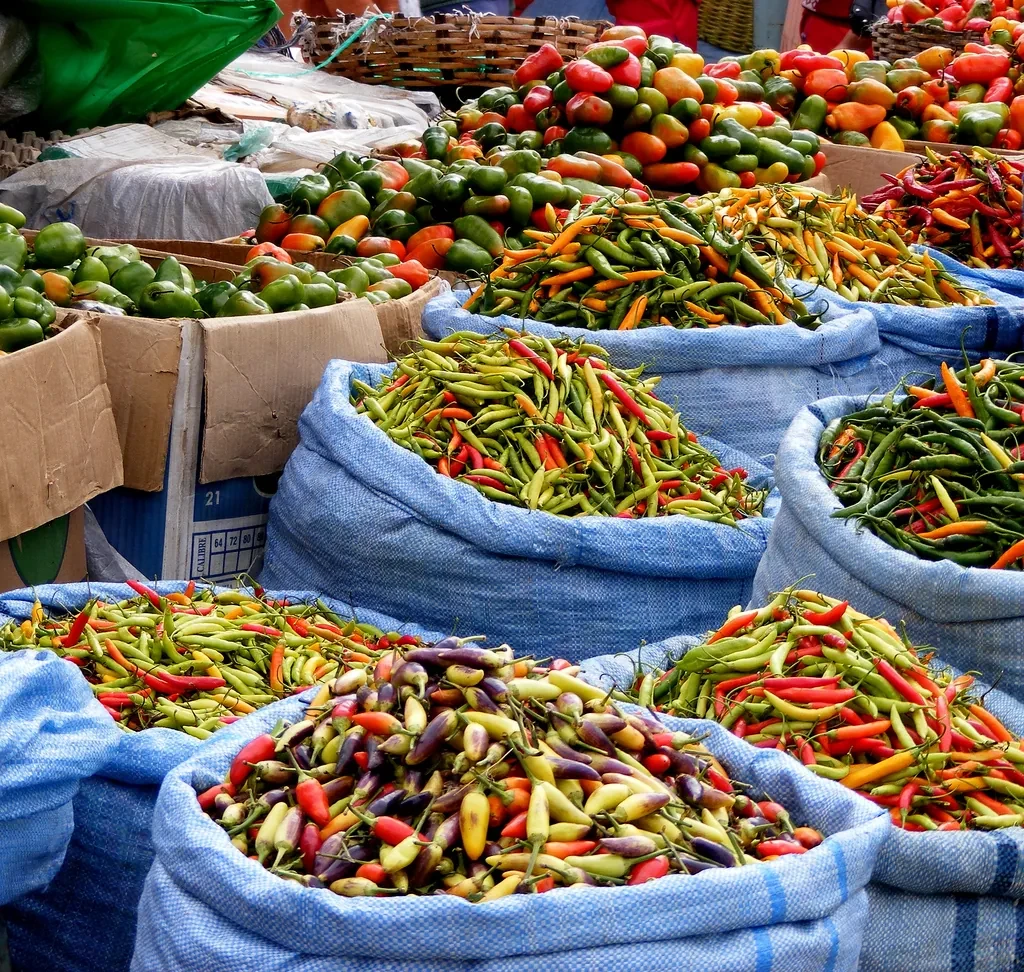
Most Bolivian dishes are not characterized by being spicy, although some are the exception and can be made with chili peppers as the main ingredient. The spiciest dishes found in Bolivia are fricasé, fritanga, ají de lengua and spicy chicken. Among the non-spicy dishes are majao, chairo paceño, salteñas, changa de pollo, llama charque, chola sandwich and empanadas.
Practical tips for traveling to Bolivia
Climate and Altitude
Bolivian territory presents a variety of climates according to the geographic region. The plains are hot and humid, with average temperatures of 25°C (77°F) and altitudes ranging between 200 and 400 meters above sea level. The climate in the valleys is warm and dry, with an average temperature of 15°C (50°F) and an altitude between 1,000 and 3,000 meters. In the Altiplano the average temperature is 10°C (40°F) and the average altitude is 3,500 meters.
Regarding its biodiversity, 65% of the territory is composed of plains, 15% of valleys and 20% of Altiplano (high plateau). The feature that makes Bolivia unique is its topography, formed by the contrast between the Altiplano (4,000 m) and the warm lowlands of the east (200 meters). This is due to the Andes Mountain Range, which in Bolivian territory divides into two chains: the Western (occidental) and the Eastern (oriental) or Royal. The Yungas —the transition zone between the dry highlands and the humid lowlands— is where the Andes descend towards the Amazon rainforest, the Brazilian Pantanal and the Chaco region.
Safety
We recommend that you exercise caution during your travels and stay in the cities. Try to travel only with essentials; do not leave your backpacks and cameras unattended and always be careful when carrying your money, airplane tickets and passport. Some places are more dangerous than others, particularly bus or train stations, restaurants and, in general, all public spaces frequented by tourists. Beware of fake police officers and taxi drivers.
Practical Tips
- Carry a valid passport with at least six months of validity after the expected period of stay in Bolivia. Consult the list of countries that require a visa. Before traveling, contact the Bolivian consulate in your country.
- Essential documentation and contacts: passport and photocopies, insurance company phone numbers and a copy of the policy, driver's license (to rent vehicles), cash, credit card (in US dollars), phone numbers, address and contacts of Late Bolivia.
- Electricity and batteries: 110V and 220V. Plan to carry an adapter compatible with American standard plugs.
- Mobile phones: you will only be able to use tri-band devices if you wish to communicate from or to abroad. However, you can make calls from your hotel or from the numerous long-distance telephone booths found in several areas of the main cities and almost in all rural towns.
- For greater comfort while traveling, it is recommended to travel "light" and carry only what is necessary, as compactly as possible (a large suitcase and a smaller backpack for the day).
- If you decide to do hiking or mountain climbing, it is important to limit the weight of your luggage to 15 kg to avoid overloading porters or mules.
Important
- If you plan to buy, only up to 20 kilograms are allowed on most transatlantic flights. It is recommended to contract luggage insurance.
- It is advisable to undergo a medical examination before the trip due to the altitude of some destinations in the country and climate variations.
- Recommended vaccines: polio, typhoid fever, hepatitis A and B and yellow fever when traveling to the Amazon. Travel with a personal first aid kit, vitamin C, aspirin or equivalent, anti-diarrheal medication, intestinal antiseptic, broad-spectrum antibiotic, anti-inflammatory ointment, eye drops, adhesive tape, band-aids, disinfectant compresses, remedies for cold and sore throat and burn creams.
- Distances between cities in Latin America tend to be quite long, in many cases 8 hours or more. Therefore, a way to save money is to travel at night and sleep on buses.
- The most economical hotels are found in areas near bus or train terminals. However, those areas are not very safe. You must be careful when eating on the street or in markets, as food preparation can be dubious, although those places are quite affordable. In Bolivia it is not difficult to haggle prices for crafts, but it is much better to buy crafts in groups to get a bigger discount.
- We invite you to get to know our country, of which we are proud for its natural wealth, but we assure you that the greatest wealth you will find will be in its people.
Tripadvisor