





Travel information for visiting the Gate of the Sun and Puma Punku in Tiwanaku
About Tiwanaku
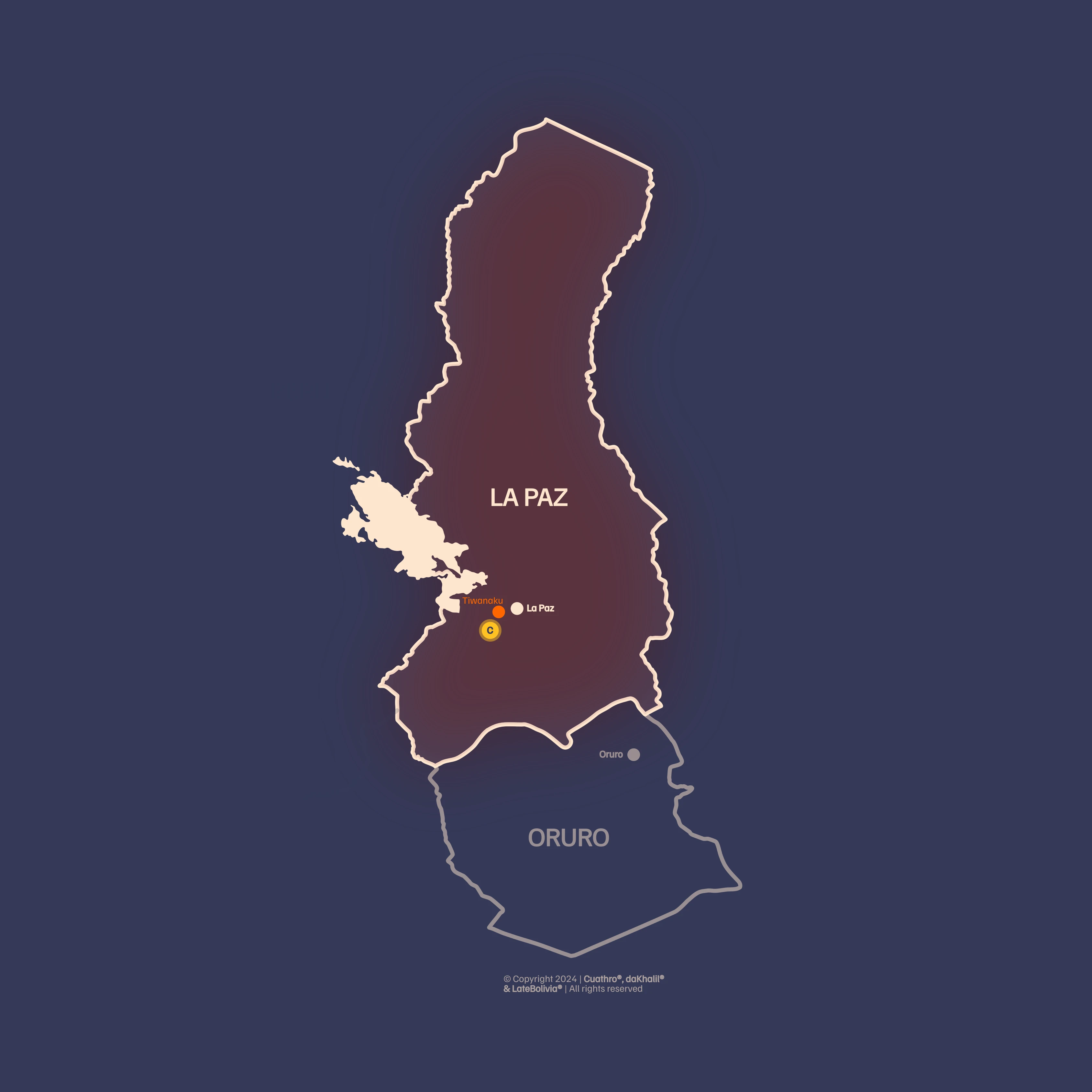
Tiwanaku (or Tiahuanaco) is the most important archaeological site in Bolivia and is located in the Ingavi province, La Paz department, at ≈ 72 km west of the capital, at 3,844 m above sea level and with an average temperature of 8 °C. Radiocarbon studies place its founding around the 2nd century AD (≈ AD 110 ± 60), although urban development accelerated from 300‑400 AD, and several constructions remained unfinished until ≈ 900 AD, when the city reached its peak. The Tiwanaku culture is traditionally divided into four chronological stages:
- Village (≈ 1500 BC–45 AD)
- Urban (45 AD–374 AD)
- Classic (374 AD–900 AD)
- Expansive (900 AD–1200 AD)
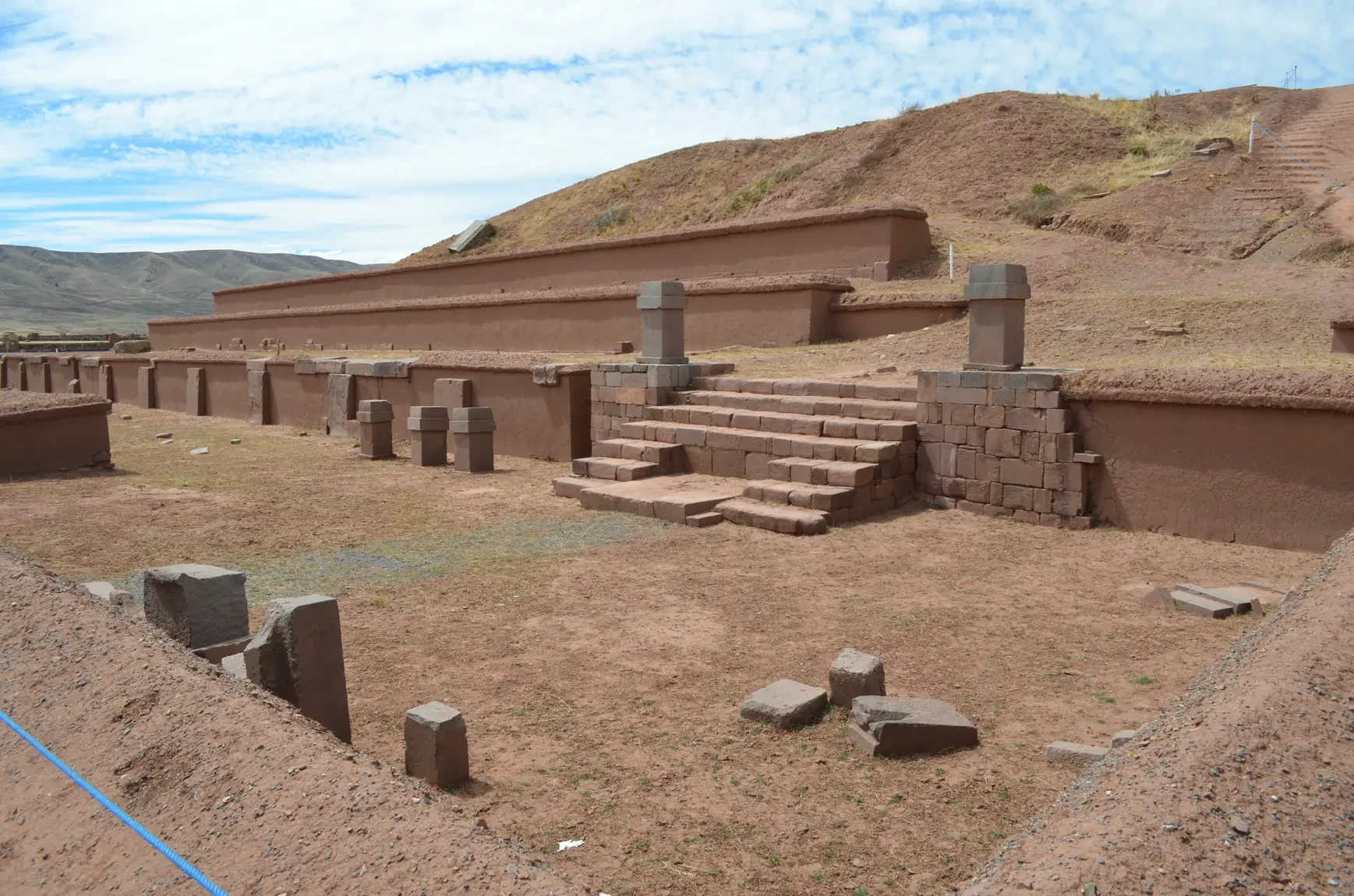
During the Expansive period, society benefited from bronze mastery, which gave it a clear technological and military advantage over its contemporaries. Tiwanaku's influence extended across much of South America: it left traces in monuments of the Inca culture of Peru, as well as in territories of Ecuador, Chile, Argentina, and eastern Bolivian Amazonia. Among its most emblematic constructions stand out the Semi-subterranean Temple, the ceremonial platform Kalasasaya, the Akapana Pyramid, the Gate of the Sun, and the megalithic complex of Puma Punku. These works, combining architectural precision, astronomical alignments, and the use of monolithic blocks, make Tiwanaku a reference in pre-Columbian engineering and a key piece for understanding the evolution of Andean civilizations.
Tourist Attractions
Semi-subterranean Temple
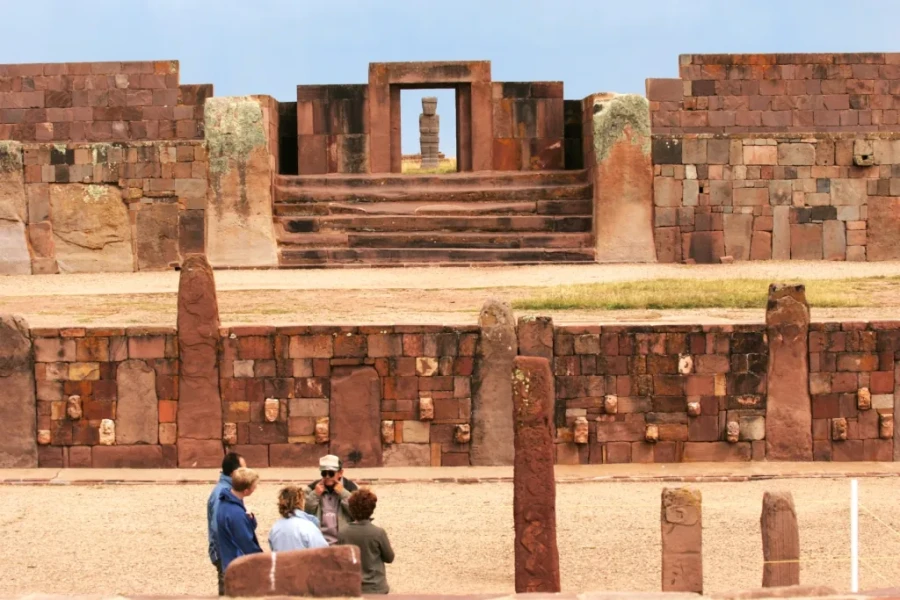
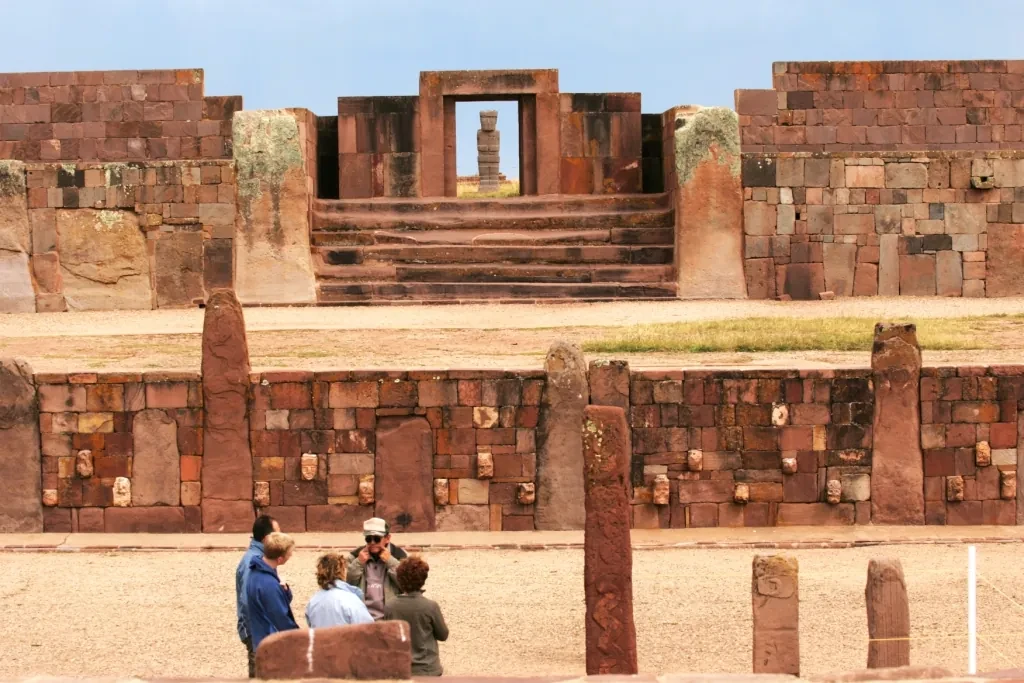
It is one of the best architectural pieces of Tiwanaku, built two meters below the level of its surrounding area, with a square floor plan surrounded by walls featuring 57 red sandstone pillars.
Embedded in the floor of the temple was the largest anthropomorphic piece, known as the Pachamama Monolith or Bennett Monolith; it is the largest of all Tiwanaku, measuring 7.30 meters in height, and like many of the site's pieces, it was carved from a single rectangular block.
Kalasasaya
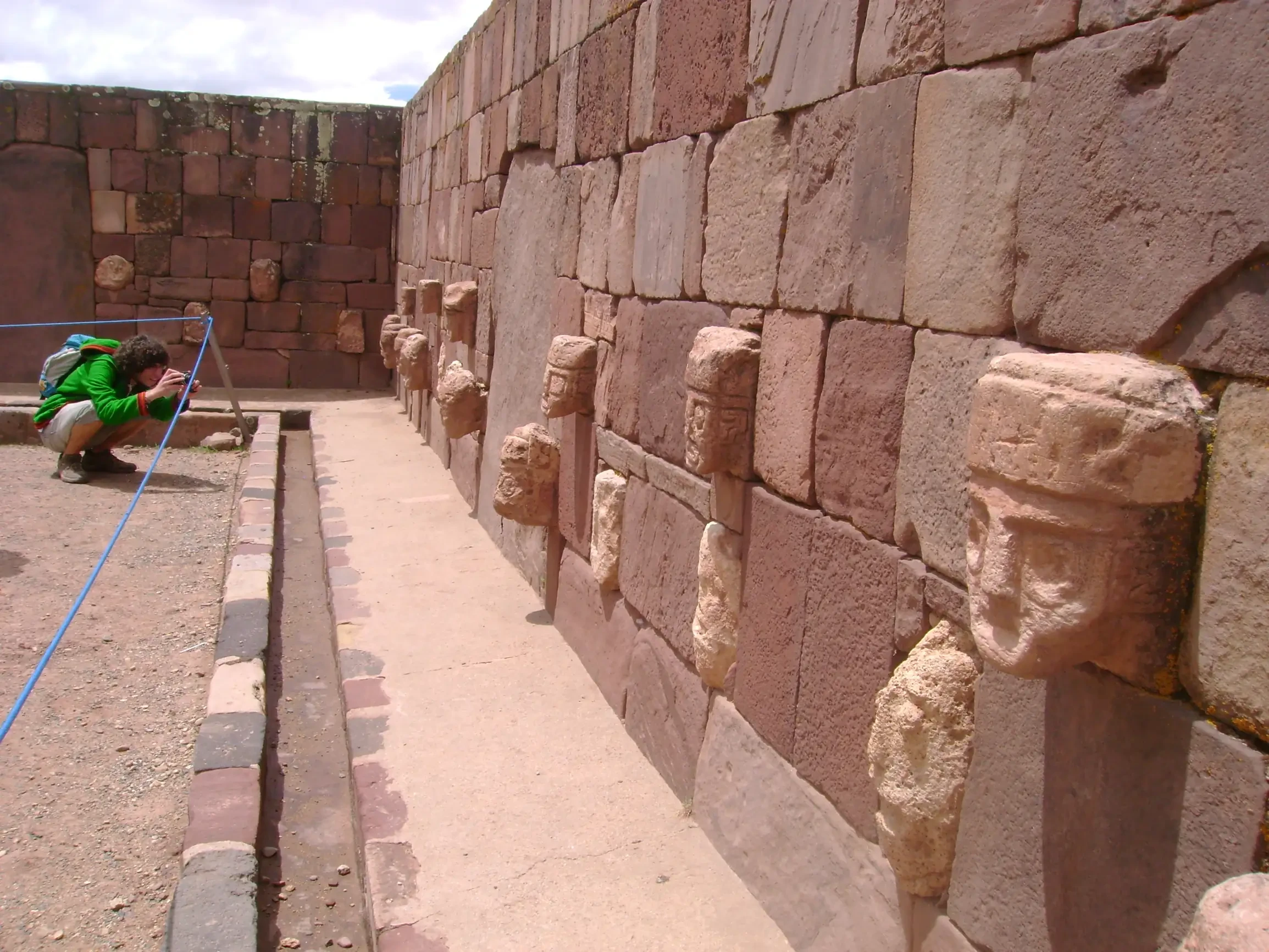
Among the temples, the most impactful is that of Kalasasaya or "Temple of Standing Stones", it is a two-hectare structure based on sandstone columns with decorative gargoyles or rainwater drainage spouts. It is a ceremonial center built with large stones five meters high, measuring 126 meters in length and 117 meters in width.
Gate of the Sun
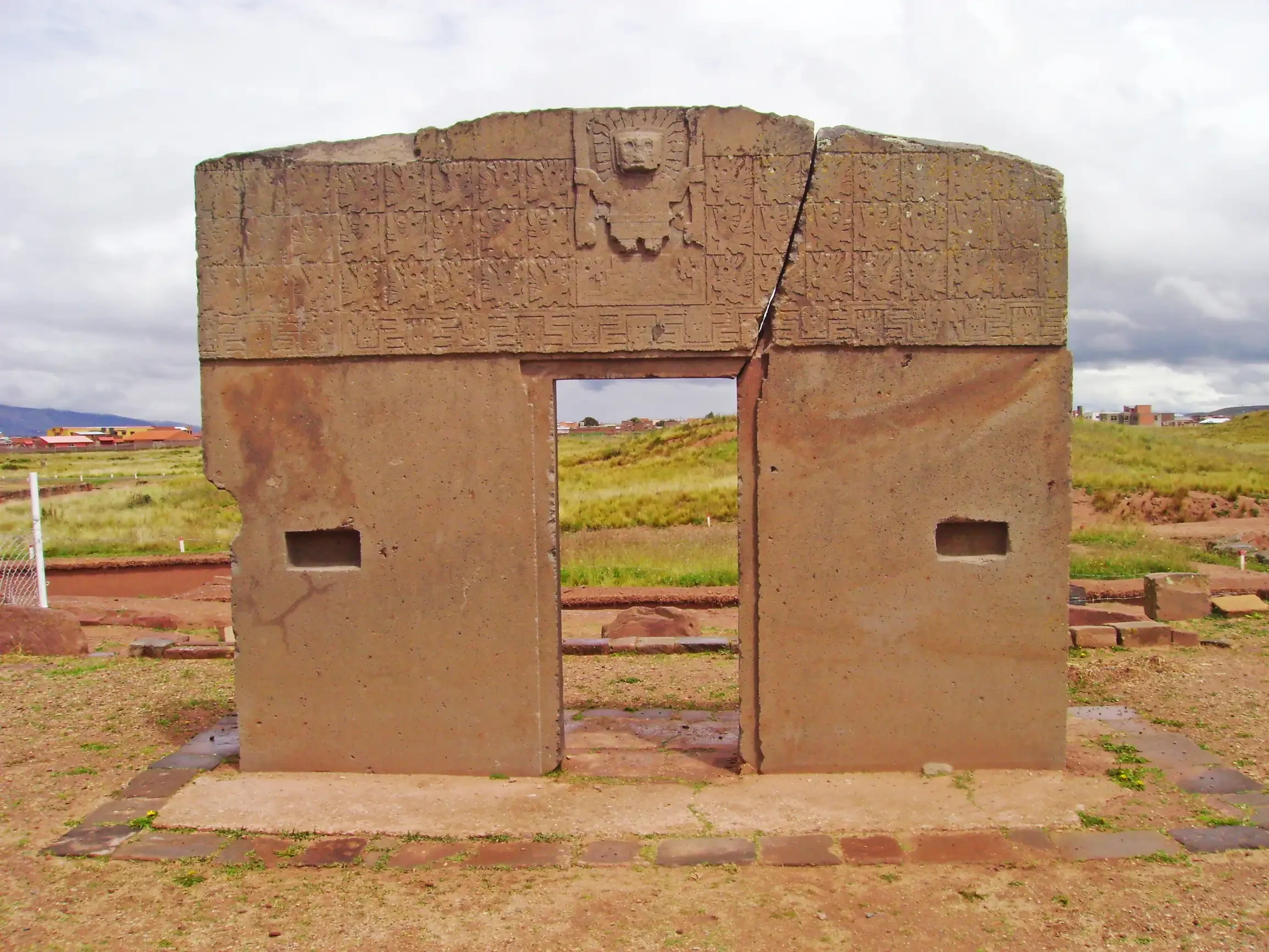
The most famous and important monument of Tiwanaku is located in Kalasasaya. It is carved from a single block of ten-ton andesite stone, measures 3 meters high and almost 4 meters wide, and is presumed to have been part of a larger structure. Its bas-reliefs display the worldview of the Tiwanaku culture with the image of the Sun God holding in each hand a scepter with figures of birds and lightning bolts. It features thirty-two sun-men figures and sixteen eagle-men figures. This hieroglyphic language and codices have not yet been deciphered; however, some scholars suppose it could be an annual calendar marking the times for planting and harvesting.
Puma Punku
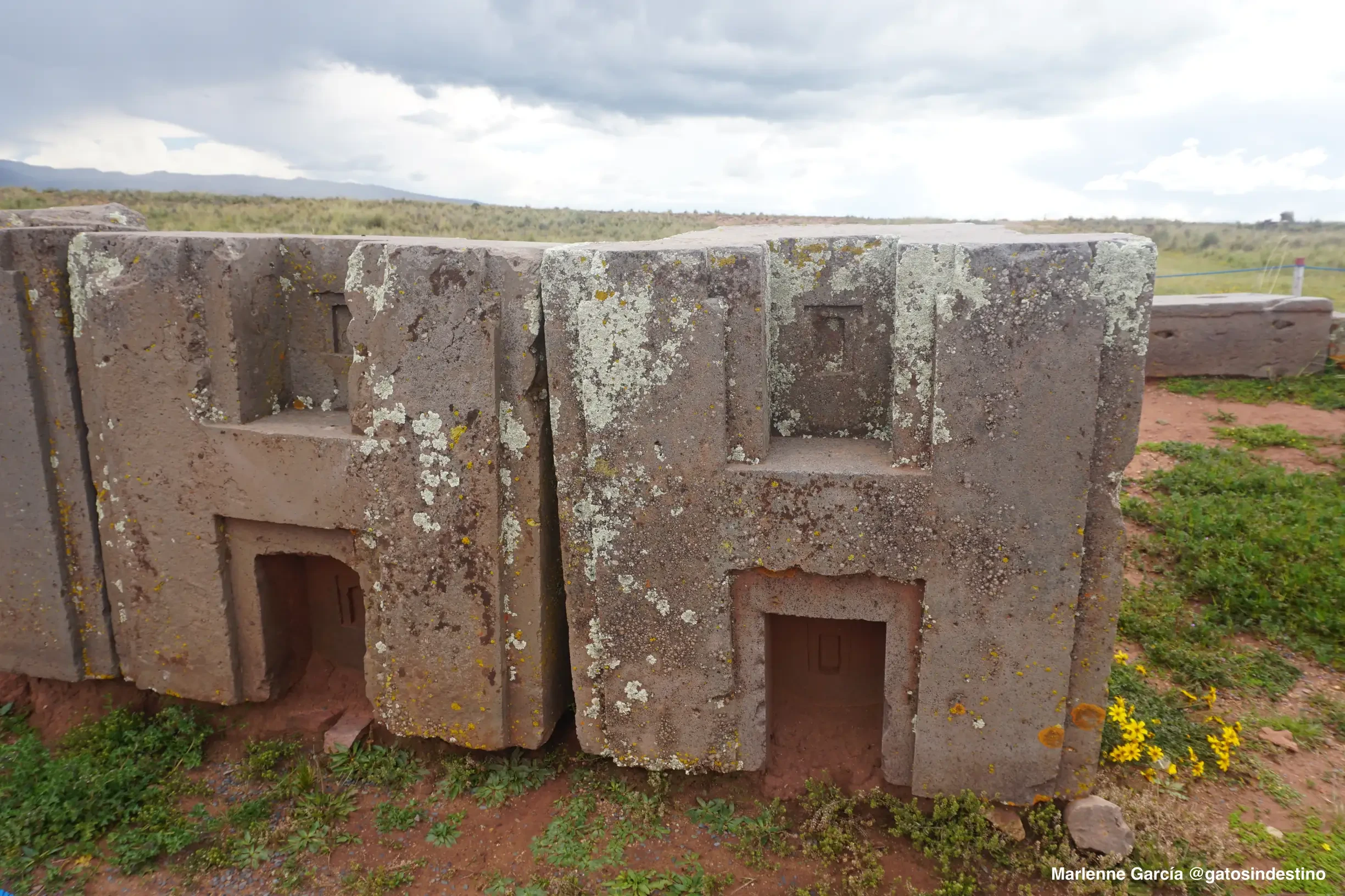
Puma Punku is one of the most enigmatic archaeological complexes in Bolivia and is part of the Tiwanaku ceremonial site, declared a World Heritage Site. Located in the Andean Altiplano, near Lake Titicaca, Puma Punku stands out for its monumental stone blocks carved with surprising precision, considered a masterpiece of pre-Hispanic engineering.
Built by the Tiwanaku civilization around the 6th century AD, this ceremonial center evidences advanced knowledge in architecture, geometry, and social organization. Its enormous blocks, some weighing more than 100 tons, were transported from distant quarries and assembled with a level of accuracy that continues to astonish researchers and visitors.
Recent archaeological investigations, supported by topographic studies, lithic analyses, and digital modeling, indicate that the complex was part of a much larger monumental structure than what is currently observed. It is believed that Puma Punku served ceremonial and symbolic functions linked to the political and religious power of Tiwanaku.
At the same time, its constructive sophistication has given rise to various theories about its origin and technology, some far from scientific consensus, which has increased its international fame.
Visiting Puma Punku is an essential experience of cultural tourism in Bolivia. The site offers a unique opportunity to discover the legacy of one of the most important civilizations of the Andes and understand the historical greatness of Tiwanaku.
Tripadvisor